You press the accelerator pedal, the engine revs increase, but your car doesn't accelerate as quickly as it should. You may also notice a burning smell, difficulty getting power to the wheels, or a distinct change in the way the clutch pedal feels.
These are classic signs of a slipping clutch. Manual vehicles frequently develop clutch concerns as friction components wear down over time. While a slipping clutch might initially seem like a minor annoyance, continuing to drive with it risks scoring your flywheel and leaving you completely stranded without drive.
01.What Does It Mean When a Clutch Is Slipping?
In any manual vehicle, the clutch serves as the vital mechanical coupling connecting the engine's rotational power to the transmission gearbox, allowing the driver to smoothly engage gears and bring power to the driven wheels.
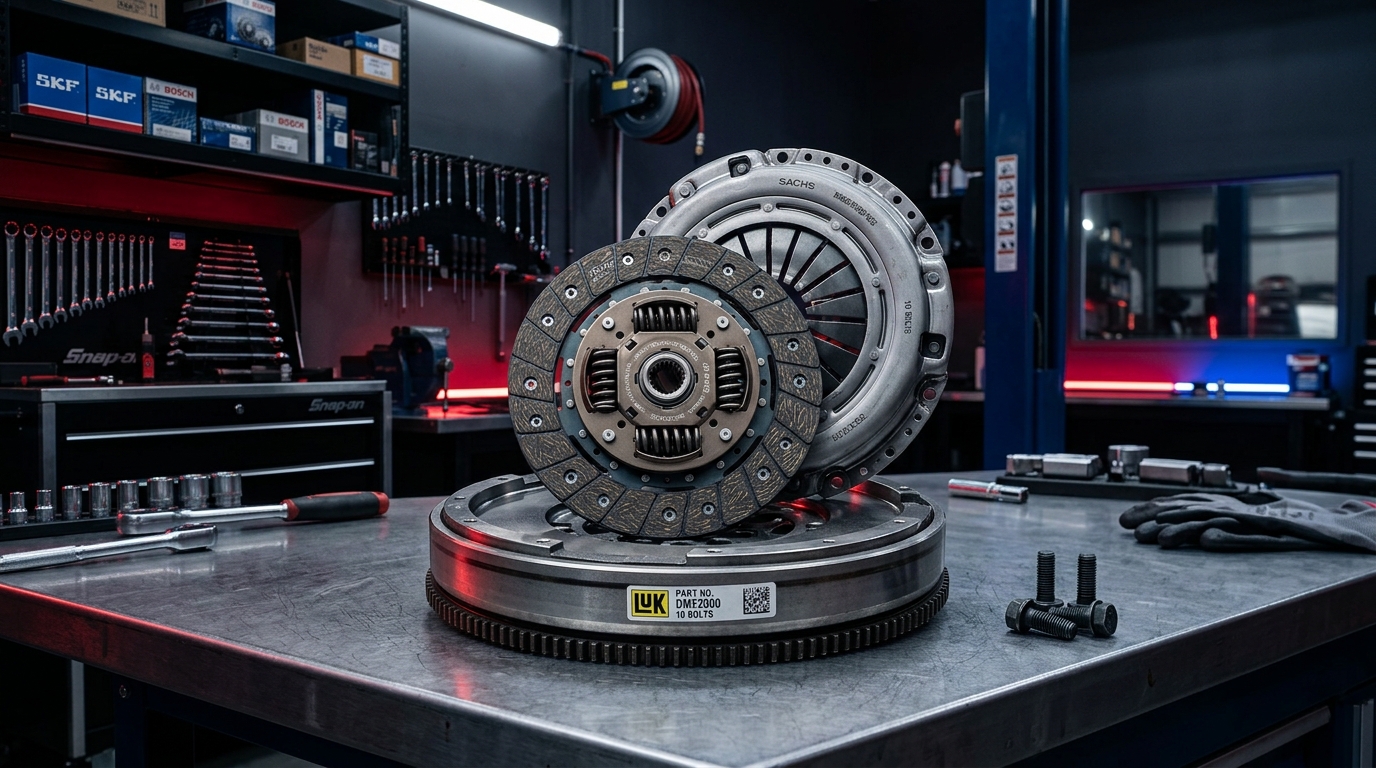
When you release the clutch pedal, heavy diaphragm springs in the pressure plate clamp the friction disc firmly against the spinning engine flywheel. Under normal conditions, these surfaces lock together solidly with zero rotational speed difference.
A slipping clutch occurs when the friction disc fails to maintain an unyielding grip against the flywheel and pressure plate. The engine revs (RPM) climb freely, yet the road speed lags behind because rotational energy is lost as friction and heat rather than transferring through the wheels.
This issue is most pronounced under high-torque driving scenarios—such as accelerating firmly onto a highway, climbing steep hills around Pakenham Upper, or towing a trailer or caravan.
02.What Are the Most Common Symptoms of a Slipping Clutch?
Clutch slip symptoms vary depending on vehicle design, mileage, and whether failure is caused by mechanical wear, hydraulic pressure loss, or oil contamination. Watch for these five primary warning signs:
Your tachometer needle shoots upward when stepping on the throttle, but the speedometer creeps up slowly. The engine revs sound high and disconnected.
Slipping generates extreme thermal friction. The burning organic or metallic lining produces a distinctive acrid smell, noticeable after driving up hills or in heavy traffic.
On flat roads the car may seem driveable, but as soon as you accelerate uphill or carry passengers and cargo, power delivery hesitates and slips.
As the friction lining wears down, the clutch bite point frequently migrates to the very top of pedal release. Alternatively, hydraulic issues cause a soft or spongy feel.
Summary Table: Common Slipping Clutch Symptoms
Use this reference guide to match your vehicle's physical symptoms with probable driveline concerns:
| Symptom | What You May Notice | Possible Concern |
|---|---|---|
| Engine RPM rises quickly | Rev counter increases rapidly without matching road speed | Friction disc is slipping against the flywheel / pressure plate |
| Poor acceleration | Car feels sluggish and struggles to gain road speed under throttle | Reduced power transfer through the drivetrain |
| Burning smell | Hot or acrid burnt friction odour noticeable after driving | Excessive clutch friction, severe disc overheating and glazing |
| Slipping under load | Problem becomes far worse uphill or when carrying heavy cargo / towing | Clutch clamping force is insufficient; disc friction material worn thin |
| Difficulty changing gears | Gear shifts become stiff, notch-heavy, or crunch into 1st / reverse | Incomplete disengagement, hydraulic failure, or synchro wear |
| Unusual clutch pedal feel | Bite point is near the top of stroke, or pedal feels soft, spongy, or sticky | Worn disc, master/slave cylinder pressure loss, or linkage misadjustment |
| Shuddering or vibration | Vehicle judders or shakes during engagement from a standstill | Warped pressure plate, contaminated friction disc, or glazed flywheel |
* Note: Symptoms can overlap with transmission internal synchronizer wear, torque converter slippage in automatics, or wheel spin. A qualified workshop inspection confirms the exact failure point.
Clutch Slip Severity & Risk Evaluator
Tick the symptoms your manual vehicle is currently exhibiting to receive an instant preliminary risk assessment:
Select one or more symptoms above to view our technicians' preliminary assessment.
03.What Causes a Clutch to Slip?
While friction wear over tens of thousands of kilometres is the most common culprit, clutch failure is frequently provoked by secondary mechanical failures. Understanding the exact cause determines whether you need a minor adjustment or a complete flywheel-back replacement:
1. Worn Clutch Friction Disc
Just like brake pads, clutch plates are lined with high-friction composite material. Every time you engage the pedal, controlled slip occurs as road and engine speeds synchronize. Over 80,000 to 150,000+ kilometres, this lining naturally thins down. Once worn down to the rivet heads, the disc can no longer generate sufficient friction to transmit torque.
2. Weakened or Worn Pressure Plate
The pressure plate incorporates tempered steel diaphragm springs that exert hundreds of kilograms of clamping force. Over years of thermal cycling, these spring fingers can lose their tensile strength or break. Even if the friction disc has remaining thickness, a weak pressure plate allows the disc to slip under load.
3. Oil or Hydraulic Fluid Contamination
Friction discs must remain completely dry. If the engine's rear main crankshaft seal leaks engine oil, or the gearbox input shaft seal weeps transmission oil, fluid enters the bellhousing. Contaminated friction material glazes instantly and slips uncontrollably. Replacing the clutch without replacing the faulty seal guarantees immediate repeat failure.
4. Incorrect Clutch Adjustment & Hydraulic Malfunction
Modern vehicles employ hydraulic clutch release systems with master and slave cylinders (or concentric slave cylinders / CSC). If a sticking cylinder fails to fully retract, or if a mechanical cable is adjusted without free-play, the release bearing continuously exerts pressure on the diaphragm fingers, preventing 100% clutch engagement.
5. Aggressive Driving Habits & Heavy Towing
Resting your left foot on the clutch pedal ('riding the clutch'), holding the car on steep inclines using the clutch rather than the handbrake, and towing loads in excess of manufacturer ratings generate intense localized heat that glazes the friction faces.
04.Can Your Driving Style Cause Clutch Slipping?
Yes. Driving habits have a monumental impact on clutch longevity. A well-driven clutch can comfortably surpass 150,000 km, whereas poor habits can destroy a brand new clutch in under 20,000 km.
A clutch is engineered to slip for a fraction of a second during takeoff and gear transitions. However, extended slippage generates temperatures exceeding 300°C–400°C. Holding the car stationary on a hill using the clutch pedal continuously bakes the friction disc and cooks the release bearing grease.
Motoring bodies advise drivers to heed changes in pedal feel and engine revving patterns early. Avoiding habits like riding the pedal and having unusual driveline symptoms inspected promptly prevents costly on-road breakdowns and expensive towing fees.
05.Why Does a Clutch Slip More When Accelerating Uphill?
When cruising along level stretches of the Princes Freeway, the rolling resistance is minimal, meaning the clutch only needs to transfer modest engine torque.
However, when you start climbing an incline, gravity exerts an opposing force directly against the vehicle's mass. To maintain speed, the engine must deliver peak torque. If the clutch friction material is worn or the pressure plate clamping force is weakened, this sudden spike in rotational resistance exceeds the grip threshold, causing the clutch to break traction and slip.
If your car accelerates fine on flat ground but revs uncontrollably on hills around Officer, Beaconsfield, or Pakenham hills, your clutch is in the secondary stages of failure.
06.Is a Burning Smell From the Clutch Serious?
Burning Clutch Friction: Extreme Thermal Warning
A pungent burning odour indicates that the clutch disc is generating severe frictional heat. The organic resins and composite binders in the disc lining are literally scorching against the steel flywheel.
This intense heat causes thermal glazing, hardening the friction face into a glassy, slick surface that permanently reduces grip. Furthermore, prolonged overheating causes thermal stress fractures ('heat checking') in the flywheel and warps the pressure plate surface, drastically increasing repair costs.
07.Can You Still Drive With a Slipping Clutch?
Technically, you may be able to limp your vehicle a short distance after symptoms first appear, but driving on a slipping clutch is risky and not recommended.
As slipping worsens, the friction material degrades exponentially. You may suddenly find the vehicle unable to move forward at a busy intersection, roundabout, or freeway on-ramp. If the car begins shuddering severely, smoking, or completely loses forward drive, pull over safely in a designated emergency bay and arrange professional towing rather than trying to force the vehicle.
08.How Is a Slipping Clutch Diagnosed?
At Star Motorworks in Pakenham, diagnosis follows a thorough diagnostic process rather than guesswork:
- Customer Consultation: We review the exact conditions when slipping occurs (high gear, under boost, uphill, or after warming up).
- Professional Road Test: A licensed technician performs controlled torque-load evaluations to reproduce slip and check bite point height.
- Hydraulic Circuit Inspection: Checking master and slave cylinders for fluid weepage, air contamination, and pedal return spring integrity.
- Under-Vehicle Inspection on Hoist: Inspecting the bellhousing inspection port for engine oil leaks (rear main seal) or gearbox oil contamination.
09.Does a Slipping Clutch Always Mean You Need a New Clutch?
Not necessarily. While a worn friction disc requires replacement, a slipping symptom can also originate from:
- A seized or partially sticking clutch master or slave cylinder.
- An incorrectly adjusted clutch cable or pedal pushrod preload.
- Degraded hydraulic brake/clutch fluid contaminated with moisture.
This is why accurate diagnosis is crucial before purchasing parts. Our mechanics verify the root problem so you never pay for unnecessary repairs.
10.What Is Usually Included in a Clutch Replacement?
When a clutch replacement is required, replacing only the friction disc is poor practice because the transmission gearbox must be removed. A complete, professional clutch overhaul includes:
Fresh high-friction composite plate with new damper springs.
New diaphragm spring cover providing factory-spec clamping pressure.
New thrust bearing or concentric slave cylinder (CSC) to eliminate bearing whine.
Precision flywheel surface grinding or dual-mass flywheel replacement.
Clutch Repair vs Clutch Replacement: Decision Matrix
| Vehicle Situation | Recommended Action |
|---|---|
| Clutch friction disc is significantly worn | Complete clutch kit replacement (disc, pressure plate & release bearing) |
| Pressure plate diaphragm spring fingers worn or weakened | Clutch assembly replacement; clamping force cannot be renewed individually |
| Clutch disc is contaminated by engine oil or gearbox fluid | Identify and replace leaking seal (rear main crankshaft or transmission input shaft), then install fresh clutch |
| Operating mechanism or hydraulic line pressure problem | Inspect, bleed, or replace clutch master / slave cylinder without necessarily pulling gearbox if disc is intact |
| Difficulty selecting gears or grinding into reverse | Inspect clutch disengagement stroke, pedal pivot bushings, hydraulic pressure, and transmission gear oil |
| Violent shudder during initial engagement | Inspect and machine flywheel or replace dual-mass flywheel (DMF) along with the clutch friction plate |
| Minor pedal-related stickiness or low return | Inspect pedal return spring, bleed DOT 4 hydraulic fluid, or renew master cylinder seals |
11.How Long Does a Clutch Usually Last?
There is no universal fixed lifespan. Clutches do not fail based on a set calendar date. A vehicle used primarily for highway touring down the South Gippsland or Monash Freeway may exceed 180,000 kilometres on its original clutch. Conversely, a vehicle enduring daily stop-start suburban traffic in Clyde North, heavy towing, or novice manual driving may require replacement around 70,000–90,000 kilometres.
12.Can Regular Car Servicing Prevent Clutch Problems?
While regular maintenance cannot stop friction material from naturally wearing out, it frequently prevents premature catastrophic failures.
During routine logbook servicing at Star Motorworks, technicians inspect the hydraulic reservoir for moisture-contaminated fluid, inspect the bellhousing for weeping rear main oil seals, and assess pedal free-play. Identifying an oil leak early saves you from ruining an otherwise healthy clutch friction disc.
13.Actionable Driving Habits to Reduce Clutch Wear
Even the slight resting weight of your shoe partially relieves pressure plate clamping force, creating continuous micro-slip and heat.
Sitting with the clutch pedal depressed at traffic lights wears the thrust release bearing and overheats the diaphragm springs.
Never balance or hold the vehicle on an incline using clutch slip. Use the handbrake or hill-hold assist to launch cleanly.
Avoid excessively revving the engine while slipping the clutch slowly into motion. Match revs cleanly to wheel speed.
14.When Should You Visit a Mechanic in Pakenham?
You should arrange an inspection the moment you notice repeated clutch slippage under acceleration, a persistent burning odour, or changes in pedal travel.
Waiting until your vehicle loses complete drive often doubles the repair bill—damaging the dual-mass flywheel, overheating the input shaft bearings, and requiring roadside emergency towing.
Clutch Slipping & Replacement FAQs
Get Your Slipping Clutch Checked in Pakenham
Don't wait for your clutch to leave you stranded. Star Motorworks provides certified clutch diagnosis, flywheel machining, hydraulic repairs, and complete clutch kit replacements backed by the Repco 12-Month / 20,000km Nationwide Warranty.