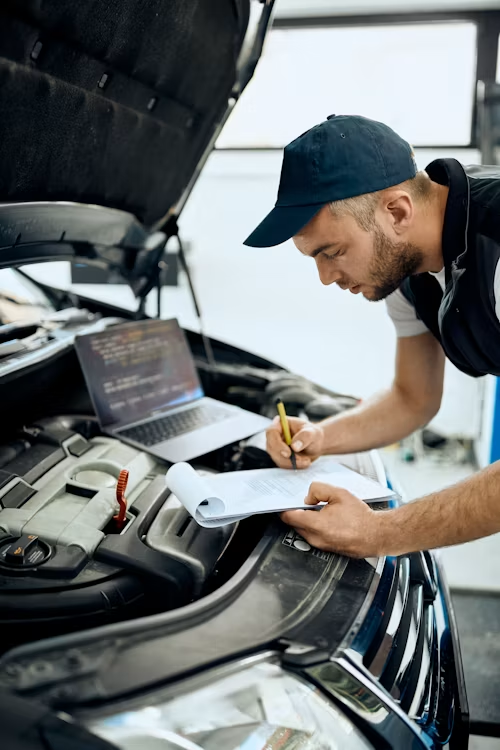
Winter in Victoria brings colder mornings, wetter roads, less daylight, and rapidly changing driving conditions. These conditions place severe additional demands on your vehicle—especially the battery, tyres, brakes, heating system, and visibility components. Preparing your car for winter helps Pakenham and Cardinia Shire motorists catch potential problems before they turn into unexpected, hazardous breakdowns.
You don’t need to make a pre-winter car checklist complicated. With several straightforward physical checks and professional testing, you can ensure your vehicle stays completely reliable throughout cold weather and everyday commutes.
!Why Is a Pre-Winter Car Check Important?
Cold weather directly influences almost every mechanical and chemical process inside your automobile. A car battery that cranked effortlessly through the warmer summer months may struggle to deliver enough current on a frosty 3°C morning. At the same time, ambient temperature drops naturally cause tyre pressures to decline, altering the vehicle's contact patch with wet bitumen.
Moreover, Victorian winters mean a dramatic increase in low-light commutes, foggy mornings along the Princes Freeway, and persistent rain. Working headlights, fog lamps, brake lights, windscreen wiper blades, and cabin demisting systems are not just conveniences—they are your primary active safety shield.
Check Your Car Battery Before Winter
Your vehicle battery is the very first component you should inspect before the colder months arrive. Cold temperatures significantly slow down the internal chemical reactions in lead-acid and AGM batteries, reducing their available starting capacity. At the same time, cold engine oil thickens, requiring significantly more starting energy to turn the crankshaft.
- • Sluggish, hesitant engine cranking on first morning start
- • Dimming headlights or interior cabin lights when idling
- • Battery or alternator charging warning light on dash
- • Power window or infotainment electrical lag
- • Inspect terminals for white or blue powdery corrosion
- • Check that positive and negative clamps are firmly secured
- • Note battery manufacture date code (older than 3–4 years?)
- • Conduct a computerized Cold Cranking Amps (CCA) load test
If your battery is getting older or your vehicle has hesitated during startup, consider having it professionally tested. A fast car battery check at Star Motorworks Pakenham will measure its conductance and state of health (SOH), letting you know whether it can withstand freezing mornings or needs replacement.
Check Your Tyres and Tyre Pressure
Tyres are your car's solitary contact point with the bitumen. On wet, oil-filmed winter roads across Pakenham and regional Victoria, maintaining optimal tyre pressure and structural integrity is paramount to keeping your vehicle controllable.
The Cold Temperature Pressure Drop: Tyre air pressure contracts in cold weather, dropping approximately 1 to 2 PSI for every 5°C reduction in ambient temperature. A tyre inflated to 34 PSI during a 25°C autumn afternoon can easily drop below 29 PSI on a chilly 5°C winter dawn. Underinflation compromises vehicle handling, increases braking distances, increases rolling resistance (reducing fuel economy), and causes severe wear along tyre outer shoulders.
How to Check Tyre Pressure Accurately:
- Check tyres when completely cold (before driving more than 2 km).
- Refer to the tyre placard on the driver's door jamb or inside the fuel flap.
- Do not rely on visual inspection—a tyre down 5 PSI often looks identical to a full tyre.
- Inspect sidewalls for cuts, gouges, blisters, or embedded screws.
Inspect Your Tyre Tread & Wet Road Grip
Adequate tyre pressure is only half the battle. Your tyres require sufficient tread depth to channel standing water away from the contact patch. When tread is depleted, water builds up beneath the rubber in a wedge, causing the tyre to lose contact with the road surface—an extremely dangerous condition known as aquaplaning.
Legal Minimum vs. Real-World Wet Safety
While the Victorian legal roadworthy minimum tread depth is 1.5mm, automotive safety testing proves that tyre stopping distances on wet roads double once tread wears below 3mm. At 100 km/h in wet conditions, a vehicle on 1.5mm tread can take an additional 18.6 metres to come to a complete stop compared to new tyres!
Inspect the tyre across the entire width of the tread, not just the visible outer edge. Uneven wear—such as feathering, cupping, or heavy inner shoulder wear—points to wheel alignment misalignment, worn suspension bushings, or steering linkages that require professional workshop calibration.
Test Your Car Heater and Windscreen Demister
Your vehicle's heating system is essential for cabin comfort during frosty Victorian mornings, but its primary safety function is windscreen visibility. The heater, blower fan, and demisting ducts work together to vaporize and clear thick internal glass condensation that builds up when warm occupant breath meets freezing external windscreen glass.
Before winter takes hold, perform a comprehensive heater test:
- • Warmth Verification: Start the engine, bring it to operating temperature, and turn temperature to maximum heat. Ensure warm air blows consistently within 5–10 minutes.
- • Airflow Across Fan Speeds: Cycle the fan switch from speed 1 to maximum. Weak airflow on higher speeds can indicate a clogged cabin pollen filter or failing blower motor resistor.
- • Vent Selection Controls: Ensure the airflow correctly redirects when selecting windscreen demist mode vs face and foot vents.
- • Sweet or Musty Odors: A distinct sweet syrupy smell inside the cabin accompanied by greasy windscreen film usually indicates a leaking heater core requiring immediate attention.
Don't Forget Your Air Conditioning in Winter
Most drivers associate automotive air conditioning solely with scorching summer heatwaves. However, your car's A/C system is arguably your most vital tool for winter windscreen demisting.
How A/C Demisting Works: When activated, the air conditioning evaporator acts as a dehumidifier, extracting moisture from damp cabin air before it is warmed and blown against the cold windscreen. Running the heater with the A/C button switched on clears heavy condensation in seconds, whereas heater air alone can take up to ten minutes to evaporate dampness.
Star Motorworks holds official ARCTICK Authorisation (AU59929). Our certified technicians can pressure test, leak check, and recharge your climate control system with R134a or next-generation R1234yf refrigerant in our Pakenham, Clyde North, or Cranbourne West workshops.
Check Engine Coolant, Antifreeze and Vital Fluids
Engine coolant—commonly called antifreeze—protects your engine from extreme thermal stresses. In winter, coolant prevents the water inside the engine block and radiator from freezing solid, which would crack cylinder heads, burst radiator cores, and destroy water pump impellers.
Other Critical Fluids to Verify Before Winter:
Inspect Your Windscreen Wipers and Washer Jets
Rain, morning frost, and road spray from trucks on the Monash Freeway or Princes Highway can make winter driving hazardous if your windscreen is dirty or wet. UV rays during the hot Australian summer harden and degrade wiper rubber blades, leaving them brittle and torn by the time winter rains commence.
Turn on your wipers and test their sweep:
- • Streaking or Smearing: Worn rubber edges leave water films directly across the driver's sightline, causing dangerous headlight glare at night.
- • Chattering or Squeaking: Wiper arms skipping across glass indicate stiff, degraded rubber or twisted wiper arms.
- • Washer Spray Patterns: Check that washer nozzle jets are aimed at the centre of the glass and not clogged with mineral deposits.
Replacing wiper blades is quick, inexpensive, and immediately transforms your forward visibility in torrential rain.
Check All Vehicle Lights and Lens Clarity
With shorter winter days, a large portion of daily commuting occurs during dawn, dusk, or nighttime darkness. Furthermore, low cloud, persistent drizzle, and valley fog are common across Cardinia and Gippsland during Victorian winters.
Take five minutes to conduct a comprehensive lighting check around your vehicle:
Lens Clarity: Modern polycarbonate headlight lenses often oxidize and turn yellow or milky from UV exposure. Cloudy lenses can reduce night beam intensity by up to 80%. Having cloudy headlights restored significantly increases your nighttime visibility distance.
Inspect Your Brakes for Wet Stopping Safety
Your braking system must be in immaculate mechanical condition year-round, but it becomes critically vital when navigating wet, slippery winter roads. Reduced road grip amplifies any mechanical imbalances in brake friction.
- • High-pitched squealing or metallic grinding during brake application
- • Steering wheel shudder or brake pedal pulsation under moderate braking
- • A soft, spongy pedal feel requiring deep travel before brakes bite
- • The vehicle pulling towards one side when braking hard
- • Illumination of the ABS or brake system warning indicator on your instrument cluster
Never wait for brakes to produce metal-on-metal grinding noises. Having your brake pads, disc rotor thickness, and hydraulic lines checked during a pre-winter car inspection prevents costly rotor replacement and guarantees reliable emergency stopping power.
Check Belts, Radiator Hoses and Under-Bonnet Leaks
A quick look beneath the bonnet can spot obvious warning signs of wear before they strand you. Rubber components expand with engine heat and contract severely in freezing overnight temperatures. This ongoing thermal cycling hardens rubber and causes fatigue cracks.
- • Drive / Serpentine Belts: Inspect belt ribs for micro-cracks, fraying edges, glazing, or loose tension that causes loud morning squealing.
- • Coolant Hoses: Feel upper and lower radiator hoses when the engine is cold. Spongy, overly soft spots or rock-hard, brittle sections indicate internal rubber degradation.
- • Clamps & Seeps: Check around hose junctions for white, green, or pink dried coolant crusts, indicating minor leaks that could rupture under winter pressure.
Prepare Your Car for Winter Driving in Pakenham & Victorian Alpine Trips
Preparing your vehicle for winter is not about one isolated component; it is about holistic mechanical reliability. For daily commutes across Pakenham, Clyde North, Cranbourne West, and Officer, having reliable battery voltage, responsive demisters, proper tyre tread, and crisp brakes ensures stress-free commuting in the rain.
Heading to the Snow or Country Victoria? If you are planning winter weekend escapes towards Gippsland, the Dandenong Ranges, or Victorian ski resorts (such as Mt Baw Baw, Lake Mountain, or Mt Buller), additional legal and mechanical requirements apply:
- Diamond-Pattern Snow Chains: In Victoria, all vehicles entering alpine resorts must carry legally compliant snow chains fitted for their specific tyre dimensions.
- Alpine Diesel Additive: Standard summer diesel waxes at sub-zero temperatures. Refuel with Alpine Mix diesel before climbing alpine roads to prevent fuel line clogging.
- Anti-Freeze Concentration: Ensure your coolant mix is certified to resist sub-zero freezing down to at least -15°C.
When Should You Book a Pre-Winter Car Service?
You don’t have to wait until something breaks down to get your car checked. A pre-winter inspection is particularly valuable if:
A professional car mechanic in Pakenham can hoist your vehicle, inspect steering joints, test battery cold cranking amps, check brake pad thickness, and spot hidden maintenance problems that are invisible during everyday driving.
Your Pre-Winter Vehicle Readiness Score
Frequently Asked Questions
Get Your Car Ready for Winter at Star Motorworks
Winter prep doesn’t have to be complicated. Before the colder months hit, having your battery, tyres, heating, brakes, fluids, and visibility inspected by qualified mechanics gives you complete confidence on every journey.
Whether you require routine logbook servicing, digital battery conductance testing, tyre replacement, or air conditioning regas, Star Motorworks is here to help keep your vehicle safe across Pakenham, Clyde North, and Cranbourne West. Backed by the Repco Nationwide 12-Month / 20,000km Warranty.
Articles published by Star Motorworks are authored and reviewed by Senior Mechanical Diagnosticians and VicRoads Licensed Vehicle Testers across our Pakenham, Clyde North, and Cranbourne West workshops. We strictly uphold manufacturer servicing standards, ARCTICK refrigerant compliance, and Repco Authorised Service nationwide warranty protection.