Your car has noticed something outside its normal range.
The warning light does not identify one failed part. It means the engine computer has detected a reading outside its expected range and stored a diagnostic trouble code. A scan helps locate the system; testing confirms the cause.
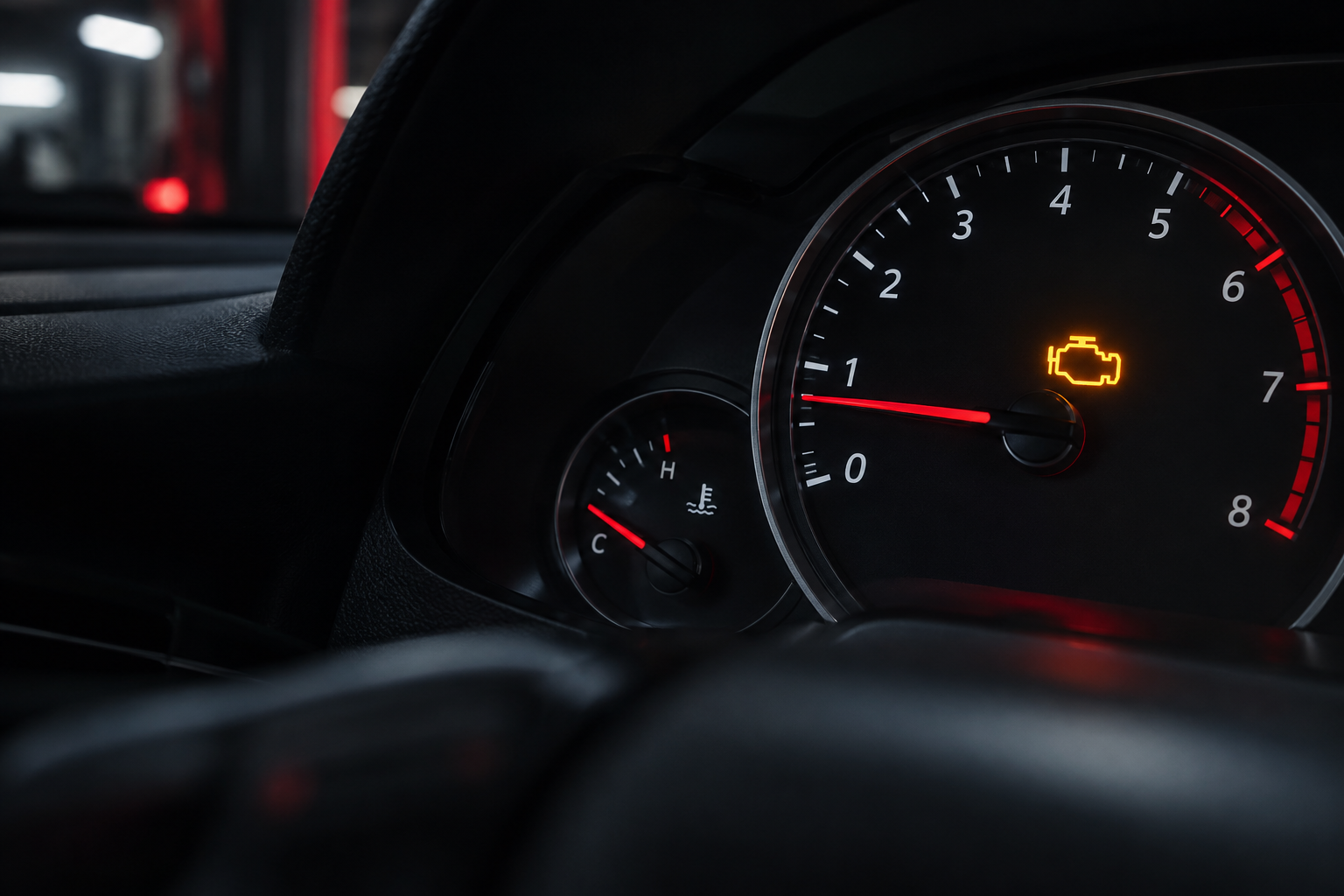 Warning light / stored code
Steady light
Usually safe for a short, gentle drive if the car feels normal. Arrange a diagnostic check soon.
Flashing light
Stop driving when safe. A flashing light can mean an active misfire that may damage the catalytic converter.
7 common causes worth checking
Select a cause to expand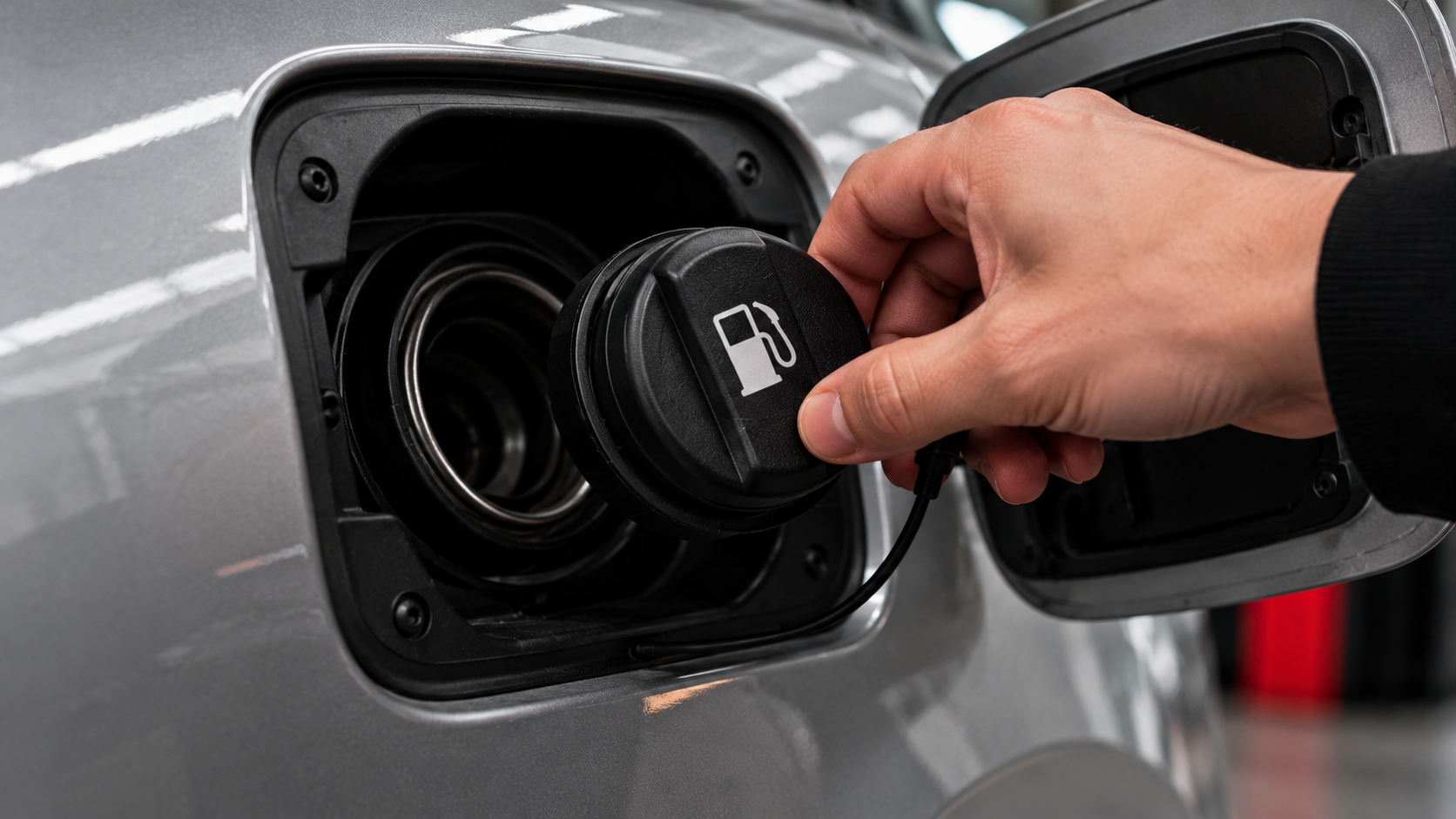 Component: Loose or Faulty Fuel Cap
Diagnostic Overview
Sometimes a loose, damaged or improperly fitting fuel cap can cause the check engine light to come on. The vehicle’s emission control system is designed to maintain a controlled vapour system and can detect a problem with the fuel cap or sealing system. If the light has come on soon after refuelling, check that the fuel cap has been fitted correctly. If the light remains on it might be necessary to carry out further diagnosis of the car to determine if the cap is the cause or something else.
Typical Symptoms
- Check engine light turns on 10–50 km after visiting a service station
- No change in engine power, idle stability, or acceleration
- Faint smell of petrol vapor near the rear quarter panel or fuel filler neck
Common Diagnostic Codes
Keep it simple
- 1Notice whether the light is steady or flashing.
- 2Pay attention to shaking, unusual smells, smoke, or loss of power.
- 3Do not erase the code or replace parts at random.
- 4Book a proper scan and diagnosis so the root cause is confirmed.
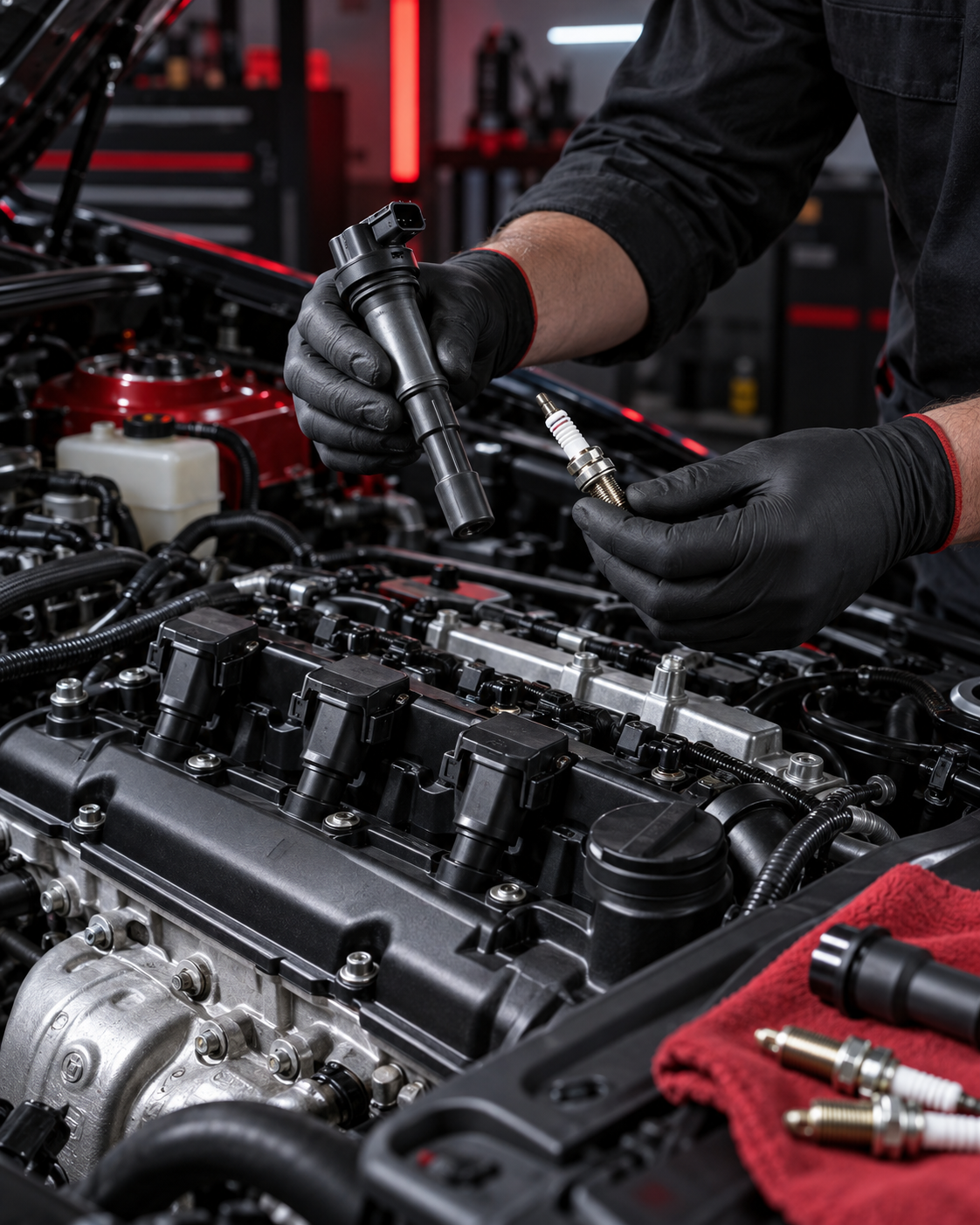
A fault code is a clue, not a repair order.
The same warning light can be caused by a sensor, wiring, a connection, or another mechanical issue. At Star Motorworks, we combine the stored code with the vehicle’s symptoms and further checks so you are not paying to replace parts by guesswork.
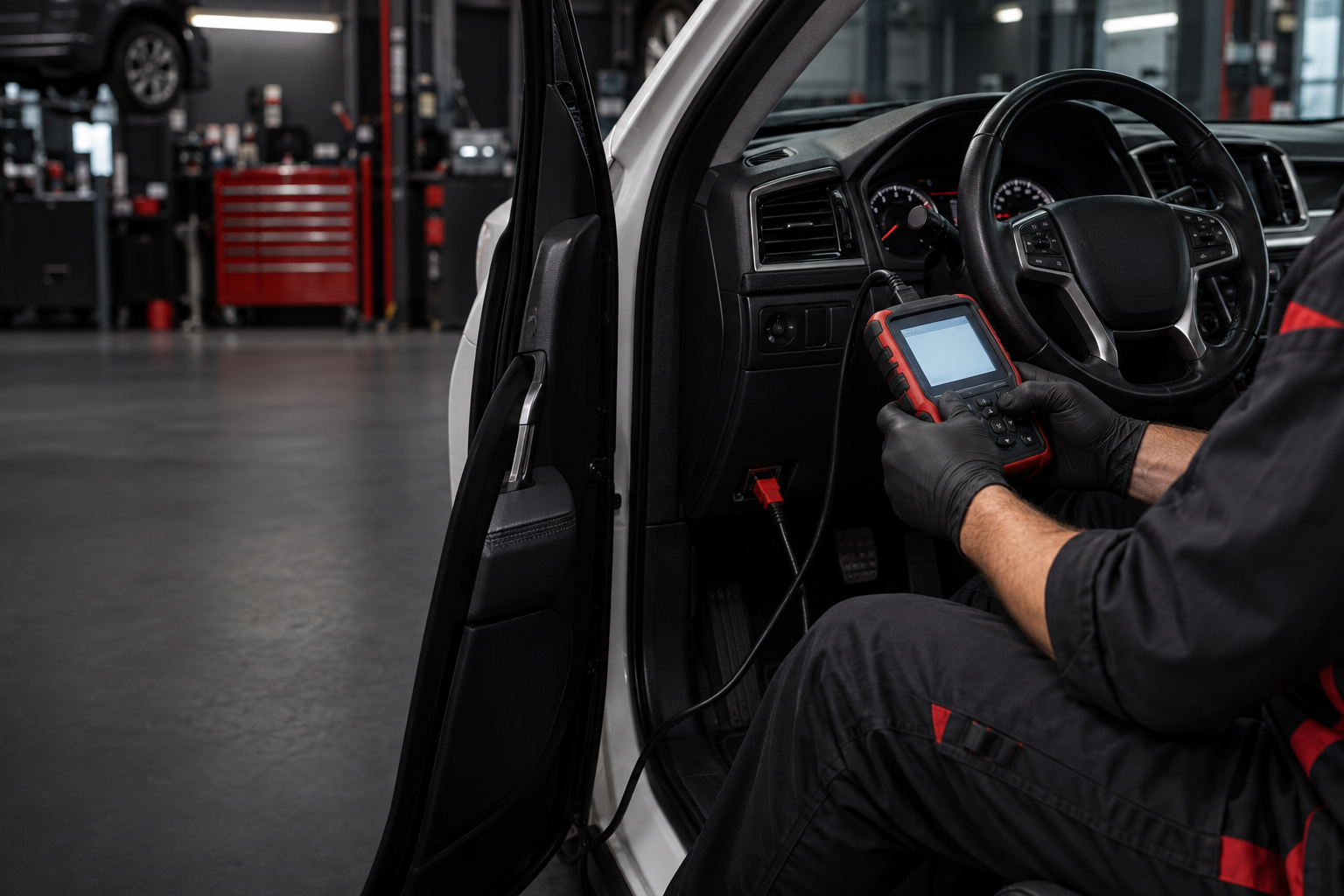
Scan + test
A professional scan retrieves the stored code. The next step is checking the relevant sensor, wiring, air, fuel, and ignition systems against the vehicle’s symptoms.
Check engine light FAQs
Why is my check engine light on?
Your check engine light can illuminate for many reasons, including fuel-system problems, oxygen sensor faults, ignition issues (worn spark plugs or coils), emissions-system faults, airflow sensor problems, and other engine-management issues. The exact cause can only be confirmed through an appropriate professional diagnostic scan.
Can I drive with the check engine light on?
If the light is steady and the vehicle is running normally without strange noises or power loss, you may be able to drive it for a short time, but have it diagnosed promptly. If the light is flashing or the vehicle is shaking, losing power, overheating, or behaving abnormally, stop as soon as it is safe to do so and seek professional help.
What does a flashing check engine light mean?
A flashing check engine light can indicate a more serious problem, such as an active engine misfire dumping raw fuel into the exhaust. Continuing to drive may risk further catastrophic damage to the catalytic converter and internal engine, so the vehicle should be assessed promptly.
How much does it cost to fix a check engine light?
There is not a single specific repair cost as the warning light can be caused by many different problems. A loose fuel cap may need little or no repair cost, but faults in sensors, ignition parts, emissions equipment, or other systems may require more extensive work. A professional diagnostic scan identifies the true fault to avoid unnecessary parts replacement.
Star Motorworks diagnostics
Let’s find the real cause.
Bring your vehicle to our Pakenham workshop for a clear explanation and the right next step.
Need help now?
Call the workshop directly and our diagnostic mechanics will advise what to do.
03 5941 1602